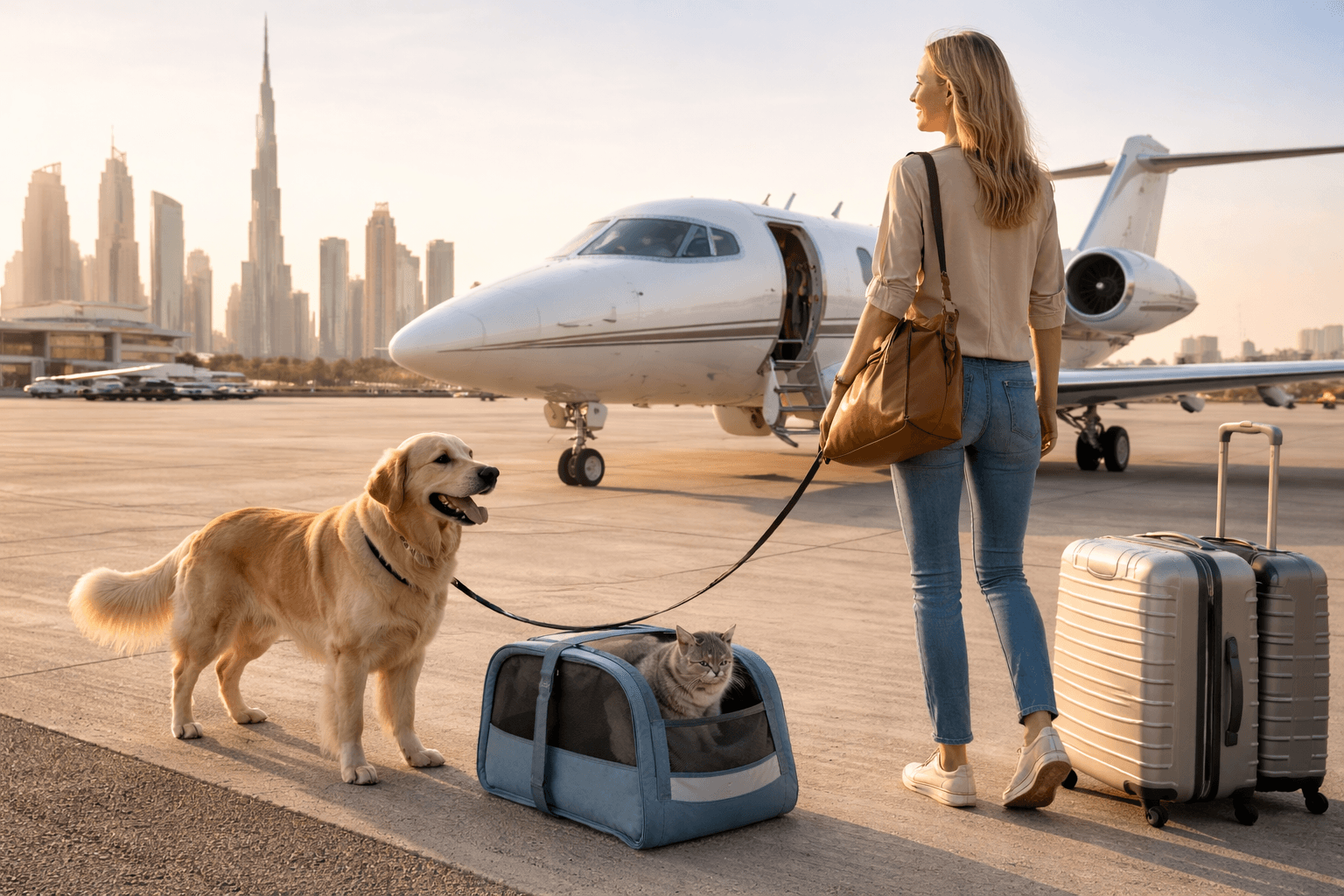

How to Move to Portugal From the USA With A Dog(2026): The No-Stress, Step-by-Step Guide (Travel or Relocation)
 Marisa Hoskins17 min read
If you’re reading this How To Move To Portugal From the USA with a Dog guide, you’re probably in one of two places:
You’re either planning a real move to Portugal and you’re trying to make sure your dog is coming with you, safely and legally, without chaos.
Or you’re planning a trip (a long stay, a scouting trip, a pet-friendly vacation, maybe even a tour) and you want to bring your dog but you keep hearing conflicting advice about paperwork, airlines, and what actually happens when you land.
I live in Lisbon with my two dogs, and I’m going to be honest with you: Portugal is one of the best places in Europe to have a dog. The culture is warm. People stop to say hi. Café terraces are normal. Vet care is excellent and, compared to North America, often surprisingly affordable.
But the entry process from the U.S. is not “casual.” It’s doable, very doable, but it’s also rule-driven. And what makes it stressful is that there are multiple gatekeepers:
- The EU rules (microchip and rabies timing)
- U.S. export rules (USDA-accredited vet + APHIS endorsement)
- Portugal’s extra step (the DGAV pre-notification)
- The airline rules (which are often stricter than the government rules)
- And the reality of landing times and airport veterinary check hours
This guide walks you through moving to Portugal with a dog, and it also covers taking a dog to Portugal for travel because from the U.S., the process is almost the same.
If you’ve already been down three rabbit holes this week and still aren’t sure you have the right plan
The first step that actually clears this up: search your specific route in the Paws Abroad Flight Marketplace free. Takes two minutes. You’ll see exactly which flights are realistic for your dog’s size and your travel dates, before you commit to anything else.
If you want the broader, general Portugal with dogs overview (all origins), read our main guide here:
Can I Take My Dog to Portugal? The Complete 2026 Guide
(Use this USA-specific guide when you want the exact play-by-play from the U.S.)
Quick answer: Can I take my dog to Portugal from the USA?
Yes most dogs can enter Portugal from the U.S. without quarantine if you follow the EU entry rules and bring the correct paperwork.
For most pet parents, the move is classified as non-commercial under EU rules (even if you’re relocating permanently). That typically means:
- ISO microchip
- Rabies vaccination done after the microchip
- Waiting period if it’s a primary rabies vaccine
- The correct EU health certificate completed by a USDA-accredited veterinarian
- USDA APHIS endorsement
- Portugal’s 48-hour pre-arrival notification to DGAV
- Veterinary check on arrival at the airport
If you’re bringing your dog (or cat) to Portugal and the paperwork is wrong, you don’t just get a slap on the wrist. The consequence can be denial of entry, forced return, quarantine at your expense (if available), and in worst-case scenarios, outcomes nobody wants to even think about. That’s why this is worth doing carefully.
Why this guide is different
Most articles online either:
- repeat generic EU rules without the Portugal-specific steps, or
- oversimplify the USDA process, or
- skip the airline reality completely.
This guide is built for real people with real timelines, real jobs, and real stress.
I’ll show you:
- the exact sequence that matters
- the timeline you should plan backward from
- where U.S. pet parents get stuck
- what to expect at Lisbon/Porto/Faro airports
- how to choose the safest airline setup for your dog
And if you want help, I’ll tell you exactly what we do at Paws Abroad because our concierge service exists for this exact situation.
How To Move To Portugal From The USA With a Dog or Cat: Pet travel requirements (the framework you’re working inside)
The U.S. is a “Part 2 listed” country under EU rules
This is the single most important technical detail for Americans.
The U.S. is treated as a “listed” country under EU pet travel rules, which generally means:
- You do not need a rabies titer test for typical U.S.→Portugal trips
- You use the standard EU non-commercial health certificate model for listed countries
- The process is microchip → rabies → certificate → endorsement → travel
The exception: if your dog has been in a non-listed/high-risk country recently, that can change the requirements.
Step-by-step: Bringing a dog to Portugal from the U.S. (non-commercial)
This is the sequence that matters. Save this section and don’t skip steps.
Step 1: Microchip (ISO compliant)
Portugal (and the EU) requires an ISO 11784/11785 compliant 15-digit microchip.
Here’s the critical rule that ruins people:
Your dog must be microchipped BEFORE the rabies vaccination used for travel.
If the rabies vaccine was given before the microchip, the EU does not count it for travel purposes. That typically means re-vaccinating after microchipping and restarting the waiting period.
Practical tip: Ask your vet to physically scan the chip and confirm the number matches all records before you leave the appointment.
Step 2: Rabies vaccination (timing matters more than people realize)
- Dogs must be at least 12 weeks old for rabies vaccination.
- Rabies must be administered after the microchip is implanted (or the same day, after implantation).
Then the question becomes: is this a primary vaccine or a booster?
- Primary rabies vaccine (first ever, or after a lapse): you must wait 21 days before entering Portugal/EU.
- Booster given within the vaccine’s validity window: typically no new waiting period, but you must show continuous coverage.
The most common mistake Americans make is thinking “my dog had rabies at some point, so I’m fine.” If the record shows a lapse, the EU may treat it like a primary again.
Step 3: EU non-commercial health certificate (Annex IV)
A USDA-accredited veterinarian must complete the EU non-commercial health certificate (dogs/cats/ferrets).
This is not your average “health certificate.” It’s a specific EU model.
Inside that certificate, your vet will include:
- microchip number
- rabies vaccine details
- an exam confirming your dog is fit to travel
- required attestations for EU entry
You’ll also sign the owner declaration that confirms non-commercial movement (not for sale, not transferring ownership).
Step 4: USDA APHIS endorsement (the bottleneck)
After your USDA-accredited vet completes the certificate, it must be endorsed by USDA APHIS.
Many people use VEHCS (electronic submission), which tends to be faster than mailing.
Important: Plan for processing time. Do not assume you’ll get it back overnight. Build buffer.
This is the part where most people realize they don’t know if they have enough time.
The APHIS endorsement window is the most common place US → Portugal trips break down. If you’re not 100% certain your timeline is workable, that’s not a reason to panic — it’s a reason to check.
The DIY Travel Plan ($147) maps out your exact timeline based on your departure date, your dog’s current vaccination status, and whether your cert needs to go through the electronic VEHCS system or physical mail. You leave with a document-by-document sequence and a day-by-day calendar.
If your trip is in the next 8 weeks, this is the thing to do today.
Step 5: Portugal-specific rule: notify DGAV at least 48 hours before arrival
Portugal requires pre-arrival notice sent to DGAV at least 48 hours before landing (this is the step a lot of Americans miss because it’s not emphasized in generic EU articles).
You send your notice to the Travellers’ Point of Entry (PEV/PCF) for your arrival airport (Lisbon, Porto, or Faro). DGAV often replies confirming receipt/review. Print that email and travel with it.
Step 6: Arrival in Portugal: airport veterinary check
When you land, your dog is subject to a veterinary documentation check and identity verification (microchip scan) at the Travellers’ Point of Entry.
Based on traveler reports and DGAV guidance, you should expect:
- document check (originals)
- microchip scan
- quick visual assessment
- an inspection fee (often reported around €40, but confirm current fees)
Important operational detail: airport veterinary checks have operating hours. If your flight lands outside those hours, you may need to arrange an alternative, which is the kind of thing that can derail arrival day if you didn’t plan for it.
The timeline that makes this feel easy (instead of stressful)
Most people don’t fail because they “didn’t care.” They fail because they planned the timeline wrong.
Here’s the timeline that keeps you safe.
6–8 weeks before travel (minimum, more is better)
- Confirm microchip is ISO compliant
- Check rabies status (verify no lapse, confirm expiry date)
- Choose your airline strategy (more on that below)
- If needed, order an IATA-compliant crate early (don’t leave this until the last minute)
30–45 days before travel
- Book flights
- Reserve the pet space properly (pet spots are limited)
- Confirm whether your dog is cabin, hold (checked baggage), or cargo
- Make sure you’re not arriving at a closed veterinary check window
10 days before arrival in Portugal (this is the tight window)
- Visit your USDA-accredited vet for exam + EU certificate
- Submit to USDA APHIS for endorsement immediately after
48+ hours before landing
- Send DGAV pre-arrival notification to the correct airport authority
- Print DGAV confirmation email if received
Day of travel
- Bring originals. Not copies. Not screenshots.
- Have your pet reservation confirmation from the airline.
- Have your dog calm, hydrated, and not sedated in a way that could cause airline refusal.
Airline reality: Flying to Portugal with a dog from the USA
Here’s the truth: airline rules are usually what make or break this trip, not the government rules.
Even if your paperwork is perfect, an airline can deny boarding if:
- the pet space was not correctly reserved
- weight limits aren’t met at check-in
- your carrier/crate doesn’t meet exact specs
- the aircraft is swapped to a type that can’t accommodate pets
- temperatures trigger an embargo (especially for hold/cargo)
- your dog appears overly stressed, unwell, or improperly prepared
Cabin vs hold vs cargo (what this actually means)
In-cabin:
Small dogs (and cats) in a soft carrier under the seat. Most airlines cap total pet+carrier weight around 8 kg/17 lbs.
Hold (checked baggage):
Your dog travels in a climate-controlled section of the plane in a hard IATA crate. Larger dogs often go this route, but it comes with temperature and routing limitations.
Cargo (manifest freight):
Used when dogs are too large for hold limits, traveling unaccompanied, or when the airline’s passenger pet options aren’t available. This can be more complex and expensive, but sometimes it’s the safest viable option for certain dogs.
TAP Air Portugal: the direct option Americans usually want
TAP is known for nonstop routes between the U.S. and Portugal. For many travelers, that direct flight is appealing because connections add complexity.
The biggest practical constraint to understand is weight rules, especially for hold travel, because the limit often applies to dog + crate combined. That catches a lot of medium-to-large dogs.
Breed and summer travel (be realistic)
If you have a brachycephalic (“snub-nosed”) breed, you need to plan with extra care. Many airlines restrict or ban snub-nosed dogs in the hold because of respiratory risk.
Even with non-brachy breeds: summer heat embargoes can restrict hold and cargo travel. If you’re moving in peak summer and your dog cannot travel in cabin, your airline options can narrow quickly.
For more information on airloine summer heat embargoes check out our Summer Pet Travel Restrictions Guide.
If you’re flexible, shoulder season travel (spring/fall) can make everything smoother.
If you just realized your dog can’t fly in cabin and your trip is in summer —
That’s a real problem, and it’s more common than the airline websites will tell you. Charter and semi-private options exist for this route, and Pooch Airways runs US→Europe shared charters specifically for dogs like yours.
(free search in the Paws Abroad marketplace no commitment)
If your situation is more complex, a large breed, summer dates, or you’re not sure which option is actually safe, that’s exactly the scenario our Guided Concierge was built for.
Cost of flying a dog to Portugal from the USA (what most people actually spend)
People love a neat number. The reality is a range.
Here’s what typically makes up the cost:
- USDA-accredited vet exam + EU certificate completion
- Rabies vaccination or booster (if needed)
- Microchip (if needed)
- USDA APHIS endorsement fee
- Airline pet fee (cabin or hold)
- IATA-compliant crate (if hold/cargo)
- Shipping costs if you’re not using electronic endorsement
- DGAV inspection fee on arrival (confirm current amount)
- Any rework costs if there’s a mistake (this is why guidance matters)
A small dog traveling in cabin, DIY, often lands in a lower range. A medium dog traveling in hold climbs quickly. Large dogs that require cargo can be significantly more.
And the biggest hidden cost isn’t money it’s time and stress when something goes wrong and you have to reissue paperwork or rebook flights.
What happens when you land in Portugal with your dog (Lisbon, Porto, Faro)
People worry about this part, so let’s make it feel predictable.
When you land, you’ll present:
- EU health certificate (endorsed)
- rabies certificate(s)
- owner declaration
- DGAV pre-notification confirmation (if you received one)
- your dog for microchip scan
The officer checks that:
- dates are valid
- chip matches documents
- endorsement is present
- your declaration is signed
- your documents are original and legible
If you’ve done it correctly, it’s usually straightforward.
The part that causes trouble is when:
- the certificate is outside the allowed validity window
- date formats are wrong
- the rabies record doesn’t clearly show validity
- the DGAV pre-notification was missed
- the flight arrives when checks can’t be completed
Moving vs traveling: do the rules change?
For most U.S. pet parents, no not in the way you think.
Even if you’re relocating permanently, the movement is still usually classified as non-commercial if:
- you’re traveling with your pet (or within the allowed window)
- you have 5 or fewer pets
- you’re not selling/transferring ownership
Where it changes is when:
- the pet travels without you outside the allowed window
- you’re moving more than 5 pets
- it’s a professional shipment or transfer of ownership
If your situation is even slightly “non-standard,” this is where people accidentally use the wrong paperwork and get stuck.
The mistakes that get American pets denied entry into Portugal (or delayed)
If you want to avoid the nightmare scenarios, make sure none of these apply:
- Rabies vaccine given before the microchip
This invalidates the vaccine for EU travel purposes. - Wrong certificate
A generic health certificate is not the EU certificate. - Not using a USDA-accredited vet
Your regular vet may be great — but if they’re not USDA-accredited, your paperwork can’t be endorsed properly. - Leaving APHIS endorsement too tight
Processing times fluctuate. Build buffer. - Incorrect date format or sloppy paperwork
This sounds minor. It’s not. It can be rejected. - Assuming airline approval is automatic
Pet reservations are limited. You need confirmation. - Missing Portugal’s DGAV 48-hour pre-notification
This is Portugal-specific and commonly missed. - Arriving outside airport veterinary check hours
This is an operational issue that can blow up arrival day.
Are pitbulls allowed in Portugal? (and “PPP” breeds)
Yes, pit bulls and other “potentially dangerous” breeds can enter Portugal, but Portugal has additional legal requirements for certain breeds and situations.
If you have a dog that falls into this category (or a mix that might be treated as one), you’ll want to plan ahead for:
- handling rules (muzzle/leash)
- documentation expectations
- longer-term registration requirements if you’re relocating
This is exactly the kind of situation where DIY advice online can get confusing fast.
What about cats? (Portugal cats and pet entry requirements)
Cats follow the same core EU framework:
- ISO microchip
- rabies vaccination done after microchip
- EU health certificate completed by a USDA-accredited vet
- USDA endorsement
- DGAV pre-notification
- veterinary check on arrival
Airline cabin rules can differ for cats, but the government entry requirements are similar.
If you’ve read this far, you now know more than 90% of people who attempt this move.
You also know that knowing is not the same as being certain.
There’s a specific kind of anxiety that sets in when you realize the thing you can’t afford to get wrong has three moving parts, each with its own timing window, and one of them (APHIS) is outside your control.
Here’s how to decide what kind of support you need:
“I understand the process but I need my exact timeline mapped, with document checklists specific to my dog and travel date.”
→ [DIY Travel Plan — $147. Your route, your pet, your calendar. No more piecing it together from five different articles.]“My trip is in the next 60 days and I want someone who has done this exact route dozens of times to check my plan and flag anything I’ve missed.”
→ [Guided Concierge — $795. Ongoing support from planning through landing day. We’ve done US→Portugal more times than we can count.]“I have a large dog, a complicated situation, or I simply do not want to manage this myself.”
→ [White-Glove Concierge — starts at $2,500. We handle it. You just show up at the airport.]Not sure which? [Take the Route Quiz →] It takes 3 minutes and tells you exactly which level makes sense for your situation.
Other resources:
- Can I Take My Dog To Europe
- Can I Take My Dog To Portugal
- 2026 Airline Pet Policies
- Cost of Health Certificate for International Travel
- International Pet Travel Requirements
FAQs
Can I take my dog to Portugal from the USA?
Yes. Most U.S. pet parents can bring a dog to Portugal without quarantine if they meet EU entry requirements (ISO microchip, valid rabies vaccination with correct timing) and carry the correct EU health certificate endorsed by USDA APHIS, plus Portugal’s DGAV pre-notification.
What are the USA to Portugal pet requirements?
In general: ISO microchip implanted before rabies vaccination used for travel, rabies vaccination (with waiting period if primary), EU non-commercial health certificate completed by a USDA-accredited vet, USDA APHIS endorsement, DGAV 48-hour pre-arrival notification, and airport veterinary check on arrival.
How early should I start planning moving to Portugal with a dog?
If your dog’s rabies vaccination is current with no lapse and you can book a USDA-accredited vet appointment easily, some people can do this in a few weeks. If rabies needs to be re-done (primary) or you’re traveling in peak season, plan 6–8 weeks ahead to protect your timeline.
Do I need a rabies titer test to bring my dog from the USA to Portugal?
Most U.S. pet parents do not, because the U.S. is generally treated as a listed country under EU pet travel rules. Exceptions can apply based on recent travel history.
What happens when I land in Portugal with my dog?
Your dog and documents are checked by border veterinary authorities at the airport. They verify microchip identity, review original paperwork, and clear the pet for entry if everything is compliant.
Are pitbulls allowed in Portugal?
Yes, but certain breeds are subject to additional legal requirements in Portugal. If you’re relocating long-term with a PPP breed, plan for stricter handling rules and local compliance requirements.
Can I bring my cat to Portugal from the USA?
Yes. Cats follow the same EU framework: ISO microchip, rabies vaccination timing, EU health certificate completed by a USDA-accredited vet, USDA endorsement, DGAV pre-notification, and arrival check.
Final note (important)
Rules and airline policies can change. Always verify requirements with USDA APHIS, DGAV, and your airline before travel. This guide is designed to help you plan correctly and avoid the common errors that derail U.S.→Portugal pet travel.
Discussion
Join the conversation
Share your experiences or ask questions about this article.